Did you read our article on how small businesses are winning with AI? If not you can find the article here: How Small Businesses Are Winning Big with AI in 2025. For solo entrepreneurs, the combination of social commerce and artificial intelligence is opening up previously unheard-of possibilities. With the market for AI in social media expected to rise at a startling 36.26% compound annual growth rate, from 3.34 billion in 2025 to 54.07 billion by 2034, the time to act is now.
In 2024, China saw the highest percentage (95%) of consumers that were involved in social commerce, followed by Thailand (94%) and Peru (92%). Others include Colombia (91%), India (91%), Indonesia (88%). While in the UK and the United States it was 53% and 56% respectively according to Emily Dean.
The Numbers Don’t Lie: Consumer Demand is Skyrocketing
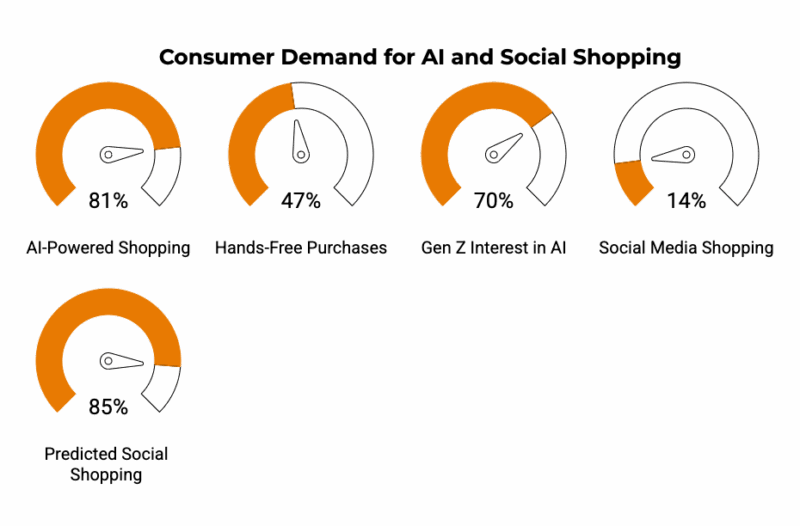
The numbers provide a clear picture of where shopping is headed. A staggering 81% of shoppers actively desire AI-powered shopping platforms, ranging from virtual try-ons to voice search functionality. This isn’t just wishful thinking; a survey by Couponfollow.com shows that 47% of consumers already make hands-free purchases using voice commands, and in 2024 according to Sellerscommerce, 70% of Gen Z consumers are very interested in AI-powered shopping experiences.
The social aspect is especially appealing for solo entrepreneurs. Currently, social media accounts for 14% of all online purchasing, but by 2030, a remarkable 85% of customers are predicted to shop primarily through social media platforms. This indicates a significant shift in how commerce operates.
The Personalisation Goldmine
Personalisation is not just good to have; it is necessary for success. According to another report from Mediaculture, an astounding 91% of consumers are more likely to shop with businesses that provide personalised offers and recommendations, while 80% are more likely to buy when firms deliver personalised experiences. This leads directly to revenue for solo businesses, as personalised recommendations presently account for 30% of eCommerce site revenue.
The social proof element is just as effective. 71% of online customers base their purchasing decisions on social media reviews, while 54% perform product research directly on social media sites. This presents a perfect storm of potential for businesses who can use AI to provide personalised, socially verified buying experiences.
The Implementation Gap: Your Competitive Advantage
Here is where solo entrepreneurs have a huge opportunity: despite enormous consumer demand, only 33% of B2B eCommerce brands have fully integrated AI into their operations, while 47% are still trying to better understand the technology. This implementation gap creates a significant first-mover advantage for agile solo entrepreneurs.
The barriers to entry are lower than you might have imagined. 80% of retail and eCommerce brands are now using or plan to use AI chatbots, and 93% believe AI agents can give them a competitive advantage. By 2027, 25% of companies are expected to use chatbots as their primary major customer service tool.
Platform Strategy: Where to Focus Your Efforts
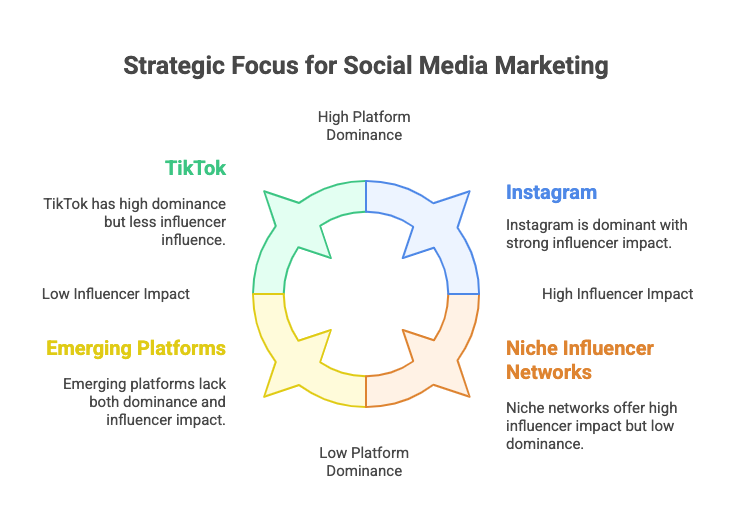
The platform data provides clear direction for resource allocation. Instagram dominates social shopping, with 72% of marketers depending on it, followed by TikTok at 61%. This isn’t surprising given that 43% of U.S. internet users are classified as “social media shopping addicts,” and 74% of consumers prefer social media shopping for purchasing goods.
The influencer economy adds another layer of opportunity. 44% of Gen Z make purchases after blogger recommendations, and 49% of social media shoppers rely on influencer suggestions. For solo entrepreneurs, this suggests a clear path: combine AI-powered personalization with strategic influencer partnerships on Instagram and TikTok.
Practical Implementation for Solo Entrepreneurs
Start with the basics that deliver immediate impact. Implement AI chatbots for customer service—they’re expected to handle 80% of all customer interactions by 2030. Focus on personalised product recommendations, which already drive 30% of eCommerce revenues. Use AI to analyze customer behavior and deliver targeted content on Instagram and TikTok.
Instagram dominates social shopping, with 72% of marketers relying on it, followed by TikTok (61%). This is hardly surprising given that 43% of internet users in the United States are categorised as “social media shopping addicts,” and 74% of consumers prefer to buy things through social media. However, as
Voice commerce deserves special attention. With 47% of shoppers already making voice purchases and voice shopping on the rise, optimizing for voice search and commands could provide significant competitive advantage.
Also Read: Shocking $127K Truth: How Faceless AI Creators Are Silently Crushing Traditional Influencers
The Bottom Line
The stats are clear: AI-powered social buying is not a distant future; it is here now. With customer demand at 81%, significant market growth expected, and low current implementation rates among competitors, solo entrepreneurs have a limited window of opportunity to build dominance in this field.
AI will change social shopping, but the real question is whether you’ll be one of the first to take advantage of this $54 billion potential. Data shows that customers are prepared, the technology is available, and the competition is still catching up.. The future of commerce is accessible to entrepreneurs who are prepared to take action on these findings.
Are you ready to use AI to advance your brand? You have read the stats, the only question is whether you’ll take advantage of the opportunity.
[…] Also read: The Future of Social Shopping with Artificial Intelligence […]