OpenAI has officially released GPT-5.1, the next-generation version of the model that powers ChatGPT, which is designed to feel more human, responsive, and customisable for users.
OpenAI has unveiled two new model types under the GPT-5.1 umbrella:
GPT-5.1 Instant: an everyday model characterised as “warmer, more intelligent, and better at following your instructions.”
GPT-5.1 Thinking: Intended for sophisticated reasoning, it is “easier to understand, faster on simple tasks, and more persistent on complex ones.”
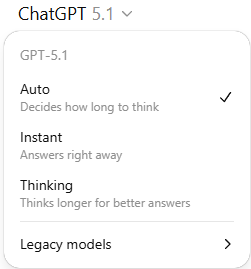
The rollout begins immediately for paid users, with free-tier access following. Users now have more control over the tone of ChatGPT’s responses thanks to newly introduced personality presets (Friendly, Professional, Efficient, Nerdy, etc.).
OpenAI emphasises that the update is about more than simply improving accuracy; it is also about making AI conversations feel more natural and in line with user preferences.
Also Read: UK creators increasingly consider themselves entrepreneurs but money-skills lag behind
What this means for creators
You will get more immediate, configurable AI assistance, which means fewer “that’s not what I meant” situations when utilising ChatGPT for content or brand management.
Since GPT-5.1 is built to follow instructions more reliably and adapt its tone, you can use it to generate scripts, captions, or even brainstorm in a voice that feels like you.
It’s time to rethink how you utilise ChatGPT: change the preset style, and try “Instant vs Thinking” for different activities.
What this means for entrepreneurs
If you use ChatGPT in your business’s workflow (customer service, product ideation, automation), this upgrade means the AI backbone has gotten stronger, fewer service faults and higher outputs.
Consider examining your AI usage and upgrading to GPT-5.1 where applicable; enhanced reasoning may unlock new features or efficiency.
In competitive terms, as more creators leverage better models, the overall quality of AI-powered content/services improves. Your competitive advantage will increasingly be determined by how you use AI, rather than what you accomplish.
