If you want to understand the future of entrepreneurship, look at what Y Combinator is now sponsoring.
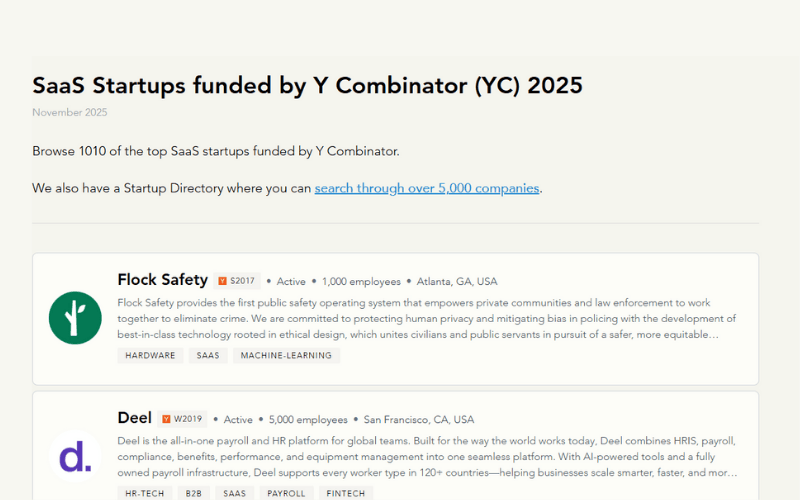
And when you look at Y Combinator’s SaaS portfolio, the real one, with real money behind it, a clear trend emerges.
YC is increasingly financing firms that automate tasks, shorten timelines, and eliminate friction from human labour.
Not software. Utilise machines.
Here’s the type of company they’re investing in, as well as why this is such an important time for innovators and entrepreneurs like you.
1. AI-enabled workflow engines
YC is all-in on firms that eliminate tedious tasks:
- Task automation
- AI-Assisted Operations
- Document intelligence
- Agent-based solutions that replace manual operations.
These are not “tools”. They are force multipliers, products that allow one person to do the work of ten.
For single makers or founder-builders, the goal is to maximise output while minimising drag.
2. Vertical SaaS based on real jobs
YC prefers startups that take a niche workflow and make it superhuman.
- AI for Logistics
- AI for Sales
- AI for Customer Support
- AI for Editing, Publishing, and Content Cycles
- AI for Finance and Compliance
These businesses do not follow hype. They seek for pain points and use automation to address them.
This is a warning: if you’re creating something, don’t include a feature. Solve a problem. Solve it so well that they will never want to go back.
3. AI-based platforms that replace departments.
YC bets heavily on companies that become a company’s “next hire”:
- AI Growth Strategist
- AI Finance Analyst
- AI Customer Success Rep
- AI Content Team
- AI Operations Manager
Y Combinator believes that the future firm is not “lean”. It is algorithmic.
That’s also excellent news for creators, who now have the unfair benefit of being able to manage a micro-team of AI workers without having to worry about payroll.
Also Read: Mastering Instagram DM Automation: Skyrocket Your Leads with ManyChat Today!
4. Infrastructure for the Agent Economy
YC’s batch list has an increasing number of:
- Agent frameworks
- Automated workflow runners
- Context managers
- Memory systems
- orchestration layers
- Multimodal execution engines
Not appealing to the people. But it is critically necessary for the next decade of AI technologies. Agents represent an inflection point, not a trend.
Y Combinator intends to fund the trains before the gold rush peaks.
5. Creator economy tools with automation at the core
Look closely: YC is financing companies that help storytellers, teachers, editors, YouTubers, newsletter operators, and niche artists.
However, it is evident that the winners are not “content tools”.
They are automation machines masquerading as content tools.
If your brand, startup, or creator identity leans toward teaching, publishing, or personal branding, now is your opportunity.
Why This Matters to You
Whether you are a creator or an entrepreneur, the Y Combinator model illustrates three fundamental truths:
- The next decade will be dominated by small teams with immense leverage.
If you understand how to coordinate AI technologies, you won’t need a 12-person team to compete.
- The future business strategy is to build once and then automate forever.
Y Combinator money is moving into subscriptions, digital products, automated services, and agent-driven operations.
- Your greatest chance is to create systems rather than just content.
Creators who think like founders succeed. Founders who think like creators succeed faster.
